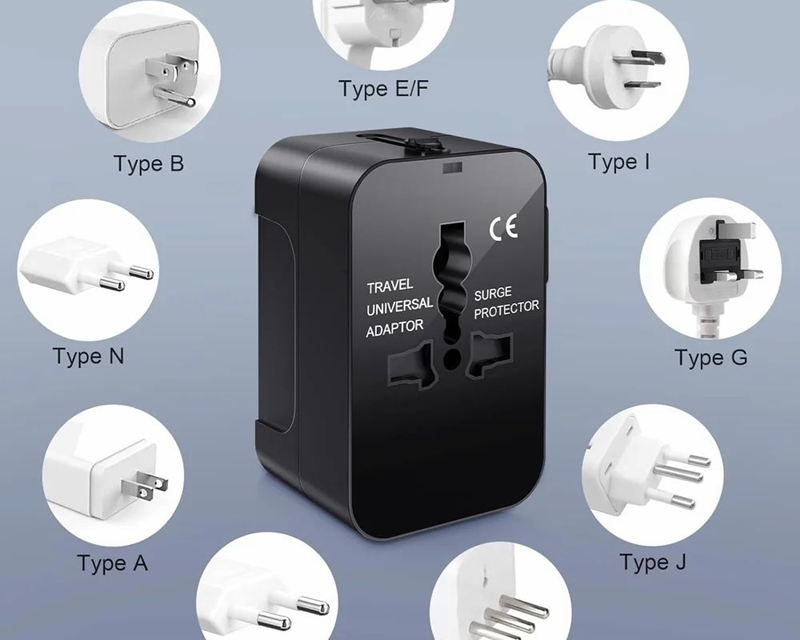
When planning an international trip, most people focus on passports, tickets, hotel bookings, and sightseeing plans. However, one small but essential item often overlooked is a travel adapter. If you carry a smartphone, laptop, camera, hair dryer, or any electronic device, a travel adapter can save you from major inconvenience abroad.
What Is a Travel Adapter?
A travel adapter is a small device that allows you to plug your electronic devices into foreign electrical outlets. Different countries use different plug shapes and socket designs. A travel adapter acts as a bridge between your device’s plug and the local power outlet.
For example, plugs used in India are different from those used in United States or United Kingdom. Without a travel adapter, your charger simply won’t fit into the wall socket.
It is important to understand that a travel adapter does not change the voltage of electricity. It only changes the plug shape so that your device can connect physically to the outlet.
Travel Adapter vs Voltage Converter
Many travelers confuse a travel adapter with a voltage converter, but they are not the same.
-
Travel Adapter: Changes plug shape only.
-
Voltage Converter: Changes electrical voltage.
Some countries operate on 110–120 volts (like the United States), while others operate on 220–240 volts (like India and the United Kingdom). If your device does not support dual voltage, you may need a voltage converter along with a travel adapter.
Most modern devices such as smartphones, laptops, and tablets are dual voltage. You can check your charger label. If it says “Input: 100–240V,” it means the device can handle worldwide voltage and you only need a travel adapter.
Why Do Countries Have Different Plug Types?
Electrical systems developed independently in different parts of the world during the early 20th century. As a result, multiple plug and socket designs were created. Today, there are more than 15 different plug types used globally.
For example:
-
Type A and B are common in the United States.
-
Type G is used in the United Kingdom.
-
Type C, D, and M are common in India.
-
Many European countries use Type C and F plugs.
Because of these differences, travelers must carry an adapter suitable for their destination country.
Types of Travel Adapters
1. Single-Country Adapter
This adapter is designed for one specific country. For example, if you are traveling from India to the United Kingdom, you can buy an adapter specifically for UK Type G sockets.
This option is usually affordable and compact, but it works only for one country.
2. Universal Travel Adapter
A universal travel adapter is more versatile. It includes multiple plug types in one compact device. You can slide out the required plug based on your destination.
Universal adapters are ideal for people who travel frequently or visit multiple countries in one trip. They are convenient and reduce the need to carry multiple adapters.
3. Travel Adapter with USB Ports
Modern travel adapters often include built-in USB ports and USB-C ports. This allows you to charge multiple devices such as phones, smartwatches, and tablets without needing separate chargers.
These are especially useful for business travelers and digital nomads.
How Does a Travel Adapter Work?
A travel adapter works by connecting your device plug to the local outlet using compatible metal pins. Inside the adapter, there is a simple wiring system that passes electricity from the wall to your device.
It does not modify power frequency or voltage. It only ensures that the plug fits properly and safely.
Some advanced models include surge protection to protect devices from sudden voltage spikes.
When Do You Need a Travel Adapter?
You need a travel adapter if:
-
You are traveling to a country with different plug types.
-
Your device plug does not match the wall outlet.
-
You plan to charge electronics abroad.
For example, if someone from India travels to the United States, their Indian charger plug will not fit American sockets without an adapter.
However, if you are traveling within your own country or to a country with the same plug type, you may not need one.
Safety Tips When Using a Travel Adapter
Using a travel adapter safely is important. Here are some key tips:
-
Always check voltage compatibility before plugging in your device.
-
Avoid overloading the adapter with too many devices.
-
Do not use high-power appliances like hair dryers unless the adapter supports them.
-
Choose certified and high-quality adapters from trusted brands.
-
Keep the adapter dry and away from water.
Remember, a travel adapter is designed mainly for low to medium power devices such as phone chargers and laptops.
How to Choose the Right Travel Adapter
When buying a travel adapter, consider the following:
Destination Country
Research the plug type used in your travel destination.
Voltage Compatibility
Check your device’s voltage rating.
Number of Devices
If you carry multiple gadgets, choose an adapter with multiple USB ports.
Build Quality
Look for safety certifications and durable materials.
Portability
Lightweight and compact models are easier to carry.
Benefits of Carrying a Travel Adapter
-
Keeps your devices powered during travel.
-
Saves time searching for compatible sockets.
-
Prevents damage caused by forced plugging.
-
Makes international travel more convenient.
-
Essential for business trips and remote work.
In today’s digital world, staying connected is crucial. Whether you are uploading travel photos, attending virtual meetings, or navigating maps, a travel adapter ensures your devices remain functional.
Common Mistakes Travelers Make
-
Assuming all countries use the same plug type.
-
Forgetting to check voltage compatibility.
-
Buying low-quality adapters that overheat.
-
Not carrying a backup adapter.
Planning ahead can prevent these problems and make your trip stress-free.
Final Thoughts
A travel adapter may look like a small accessory, but it plays a big role in international travel. It allows you to connect your electronic devices safely to foreign outlets without worrying about plug compatibility.
Before your next trip, take a few minutes to check the plug type and voltage of your destination. Investing in a reliable travel adapter can protect your devices and ensure uninterrupted connectivity throughout your journey.