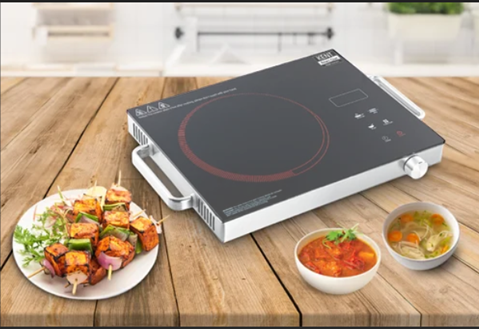
Cooking technology has evolved significantly over the years. Traditional cooking methods such as wood stoves and gas burners are gradually being replaced by more efficient and safer alternatives. One of the most popular modern cooking appliances today is the induction stove. Known for its fast heating, energy efficiency, and safety features, induction stoves are becoming increasingly common in homes, restaurants, and hostels.
induction stove
What is an Induction Stove?
An induction stove is an electric cooking appliance that uses electromagnetic technology to heat cookware directly. Unlike traditional gas stoves or electric coil stoves, an induction stove does not produce heat through flames or heating elements. Instead, it creates a magnetic field that generates heat directly inside the cooking utensil.
This technology allows the food to cook faster and more efficiently. The surface of the stove itself remains relatively cool because the heat is generated only in the cookware placed on it.
Induction stoves usually come with a flat glass or ceramic surface and a digital control panel. Many models include temperature controls, timers, safety locks, and multiple cooking modes.
How Does an Induction Stove Work?
The working principle of an induction stove is based on electromagnetic induction. Inside the stove, there is a copper coil located beneath the glass surface. When electricity flows through the coil, it creates a magnetic field.
When a compatible metal pan is placed on the stove, the magnetic field induces electric currents in the base of the cookware. These currents generate heat directly inside the pan, which then cooks the food.
This method of cooking is very efficient because:
-
Heat is produced directly in the cookware
-
Very little energy is wasted
-
Cooking starts almost instantly
However, induction stoves only work with cookware made of ferromagnetic materials, such as cast iron or certain types of stainless steel.
Key Features of an Induction Stove
Modern induction stoves come with many advanced features that make cooking easier and more convenient.
1. Fast Heating
Induction stoves heat up much faster than traditional gas or electric stoves. Water can boil within minutes, which helps save time during cooking.
2. Energy Efficiency
Induction cooking is highly energy efficient. Most of the heat energy is transferred directly to the pan instead of the surrounding air. This reduces energy loss and lowers electricity consumption.
3. Digital Temperature Control
Many induction stoves allow users to set exact temperature levels. This helps maintain consistent cooking results and prevents food from burning.
4. Safety Features
Induction stoves are considered safer than gas stoves because there is no open flame. Most models include safety features such as:
-
Auto shut-off
-
Child lock
-
Overheat protection
-
Pan detection technology
These features reduce the risk of accidents.
5. Easy Cleaning
The smooth glass surface of an induction stove is very easy to clean. Since the surface does not get extremely hot, spilled food usually does not burn or stick to the surface.
Advantages of Using an Induction Stove
There are many reasons why people are switching to induction stoves for daily cooking.
Faster Cooking
Induction stoves cook food faster compared to traditional gas stoves. The heat transfer is direct and efficient, reducing cooking time.
Energy Savings
Because the energy is directly transferred to the cookware, less electricity is wasted. This can help reduce electricity bills over time.
Better Temperature Control
Induction stoves provide precise temperature control. This is especially useful for delicate cooking tasks such as melting chocolate or simmering sauces.
Improved Safety
Since there is no flame or gas leakage, induction stoves are safer to use in homes with children or elderly family members.
Environment Friendly
Induction cooking produces no smoke or harmful gases. This makes it a cleaner and more environmentally friendly cooking option.
Disadvantages of Induction Stoves
Although induction stoves have many advantages, there are also some limitations to consider.
Special Cookware Required
Induction stoves require cookware made of magnetic materials such as cast iron or induction-compatible stainless steel. Aluminum or copper utensils usually do not work unless they have a magnetic base.
Higher Initial Cost
Induction stoves can be more expensive than traditional gas stoves. However, the long-term energy savings often make up for the higher initial cost.
Dependence on Electricity
Since induction stoves run on electricity, they cannot be used during power outages unless there is a backup power supply.
Learning Curve
People who are used to cooking on gas stoves may need some time to adjust to the controls and cooking style of an induction stove.
Types of Induction Stoves
Induction stoves are available in different types depending on user needs.
Portable Induction Stove
These are small, lightweight stoves that can be easily moved or stored. They are ideal for small kitchens, hostels, and travel.
Built-in Induction Cooktops
Built-in models are installed directly into kitchen countertops. They offer a sleek and modern appearance and usually include multiple cooking zones.
Commercial Induction Stoves
Restaurants and professional kitchens often use commercial induction stoves because they are fast, efficient, and easy to maintain.
Tips for Using an Induction Stove
To get the best performance from an induction stove, users should follow a few simple tips.
Use compatible cookware with a magnetic base.
Always place the pan at the center of the cooking zone for even heating.
Avoid dragging heavy utensils across the glass surface to prevent scratches.
Clean the surface regularly using a soft cloth.
Make sure the bottom of the pan is dry before placing it on the stove.
Following these tips can help extend the life of the appliance and improve cooking results.
Is an Induction Stove Worth Buying?
For many households, an induction stove is a great investment. It offers faster cooking, better energy efficiency, and improved safety compared to traditional cooking methods.
People living in apartments, hostels, or areas where gas connections are difficult to obtain may find induction stoves especially useful. They are also a good choice for modern kitchens that focus on convenience and cleanliness.
While the initial cost may be slightly higher, the long-term benefits often outweigh the disadvantages.
Conclusion
Induction stoves represent a major advancement in modern cooking technology. By using electromagnetic energy to heat cookware directly, they offer faster cooking, higher efficiency, and improved safety compared to traditional gas stoves.
With their sleek design, easy maintenance, and advanced features, induction stoves are becoming a popular choice in many homes around the world. As technology continues to improve, induction cooking is likely to play an even bigger role in the kitchens of the future.
For anyone looking for a convenient, safe, and energy-efficient way to cook, an induction stove is definitely worth considering.