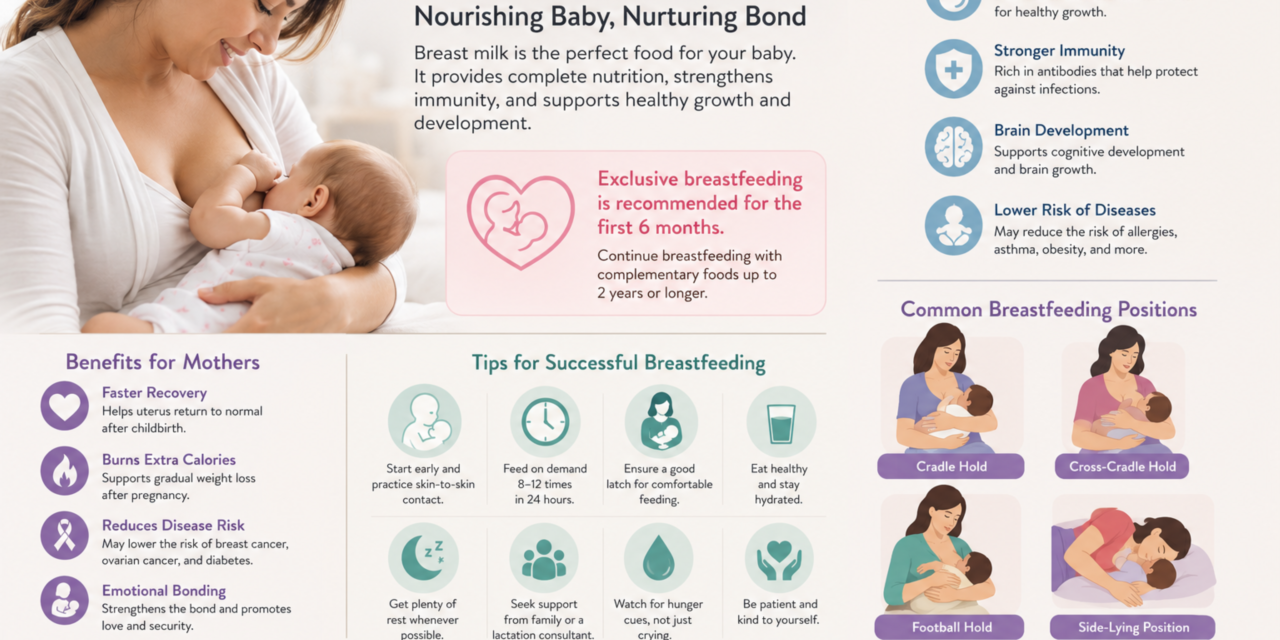
Bringing a baby into the world is an exciting and life-changing experience. One of the most important decisions new parents make is how to feed their newborn. Breastfeeding is widely recommended by healthcare professionals because it provides ideal nutrition and supports the healthy growth and development of infants. Beyond nutrition, it also strengthens the emotional bond between mother and baby.
What Is Breastfeeding?
Breastfeeding is the natural process of feeding a baby with milk produced by the mother’s breasts. Breast milk contains the right balance of nutrients, antibodies, vitamins, and minerals needed for a baby’s healthy growth.
Health experts recommend exclusive breastfeeding for the first six months of life. After six months, solid foods can be introduced while breastfeeding continues alongside complementary foods for up to two years or longer, depending on the preferences of the mother and child.
Benefits of Breastfeeding for Babies
Breast milk is often described as the perfect food for infants because it changes over time to meet a baby’s nutritional needs.
Some of the key benefits include:
1. Complete Nutrition
Breast milk provides proteins, healthy fats, carbohydrates, vitamins, and minerals in the right proportions. It is easy to digest and supports healthy weight gain.
2. Stronger Immune System
Breast milk contains antibodies that help protect babies from infections. Breastfed infants may experience fewer cases of:
- Ear infections
- Respiratory infections
- Diarrhea
- Stomach infections
3. Healthy Brain Development
Studies suggest that breastfeeding supports cognitive development due to essential fatty acids such as DHA, which contribute to brain growth.
4. Reduced Risk of Chronic Diseases
Breastfed babies may have a lower risk of developing:
- Childhood obesity
- Type 2 diabetes
- Asthma
- Allergies
- Certain digestive disorders
Benefits of Breastfeeding for Mothers
Breastfeeding is beneficial not only for babies but also for mothers.
Faster Recovery After Childbirth
Breastfeeding stimulates the release of hormones that help the uterus return to its normal size after delivery.
Burns Extra Calories
Producing breast milk requires energy, which may help mothers gradually lose pregnancy weight when combined with a healthy diet.
Reduced Risk of Certain Diseases
Long-term breastfeeding has been associated with a lower risk of:
- Breast cancer
- Ovarian cancer
- Type 2 diabetes
- High blood pressure
Emotional Bonding
Skin-to-skin contact during breastfeeding encourages emotional closeness between mother and baby, promoting feelings of comfort and security.
Understanding Colostrum
During the first few days after birth, mothers produce a thick yellowish milk called colostrum.
Colostrum is rich in:
- Antibodies
- Protein
- White blood cells
- Vitamin A
Although produced in small amounts, it is highly concentrated and perfectly suited to a newborn’s tiny stomach.
How Often Should a Baby Breastfeed?
Newborn babies usually feed:
- 8 to 12 times every 24 hours
- Every 2 to 3 hours
- Whenever they show signs of hunger
Common hunger cues include:
- Sucking on hands
- Opening the mouth
- Turning toward the breast
- Smacking lips
- Restlessness
Crying is often a late sign of hunger, so feeding earlier is generally easier.
Proper Breastfeeding Position
Finding a comfortable position helps both mother and baby.
Popular breastfeeding positions include:
Cradle Hold
The baby’s head rests in the mother’s arm while facing the breast.
Cross-Cradle Hold
The mother supports the baby’s head with the opposite hand for better control.
Football Hold
The baby is tucked under the mother’s arm, making it useful after a cesarean birth or for mothers with twins.
Side-Lying Position
Mother and baby lie on their sides facing each other. This position can be especially comfortable during nighttime feeds.
Achieving a Good Latch
A proper latch is essential for comfortable and effective breastfeeding.
Signs of a good latch include:
- Baby’s mouth covers much of the areola, not just the nipple.
- Lips are turned outward.
- Chin touches the breast.
- Feeding is comfortable with little or no pain.
- Baby swallows rhythmically.
Poor latching may lead to sore nipples and reduced milk transfer.
Common Breastfeeding Challenges
Many mothers face difficulties during the early weeks. Most issues improve with guidance and practice.
Sore Nipples
This often results from improper latching. Correct positioning and allowing nipples to air dry after feeding may help.
Engorgement
Breasts may become swollen and painful when milk first comes in. Frequent feeding and warm compresses before nursing can provide relief.
Low Milk Supply
Milk production usually increases with frequent feeding. Staying hydrated, eating balanced meals, and breastfeeding on demand can help maintain supply.
Blocked Milk Ducts
A blocked duct may cause tenderness or a small lump. Gentle massage, continued breastfeeding, and warm compresses often help resolve it.
Mastitis
This breast infection may cause redness, swelling, fever, and pain. Medical evaluation is important, and treatment may include antibiotics.
Nutrition Tips for Breastfeeding Mothers
Healthy eating supports both mother and baby.
Recommended habits include:
- Eat a variety of fruits and vegetables.
- Include whole grains.
- Consume protein-rich foods such as eggs, beans, fish, poultry, and dairy.
- Drink plenty of water.
- Limit processed foods and sugary drinks.
- Reduce alcohol intake and seek medical advice regarding medications while breastfeeding.
There is generally no need for a special diet unless recommended by a healthcare professional.
When to Seek Medical Advice
Consult a healthcare provider or lactation consultant if:
- The baby is not gaining weight.
- Feeding remains painful after correcting positioning.
- The baby has fewer wet diapers than expected.
- The baby appears sleepy during every feeding.
- The mother develops fever, severe breast pain, or signs of infection.
Early support often prevents minor issues from becoming more serious.
Tips for Successful Breastfeeding
To establish a positive breastfeeding experience:
- Begin breastfeeding as soon as possible after birth if medically appropriate.
- Feed your baby whenever they show hunger cues.
- Practice skin-to-skin contact regularly.
- Avoid unnecessary formula supplementation unless advised by a healthcare professional.
- Get adequate rest whenever possible.
- Ask family members for support with household responsibilities.
- Reach out to a lactation consultant if challenges arise.
Remember that every mother and baby are unique. Breastfeeding is a learning process that often becomes easier with time.
Conclusion
Breastfeeding offers exceptional health benefits for both babies and mothers. It provides complete nutrition, strengthens the immune system, promotes healthy development, and fosters a close emotional connection. While some mothers experience challenges in the beginning, patience, proper guidance, and family support can make the journey more comfortable and rewarding.
Every feeding experience is different, and there is no single “perfect” approach. The most important goal is ensuring that both mother and baby are healthy, supported, and thriving. If concerns arise, seeking advice from a qualified healthcare provider or lactation consultant can provide personalized guidance and reassurance.
Disclaimer: This article is for informational purposes only and should not replace professional medical advice, diagnosis, or treatment. Always consult a qualified healthcare provider or lactation consultant regarding breastfeeding concerns or your baby’s nutritional needs.